
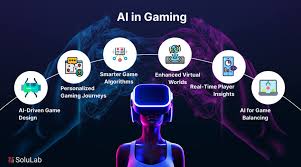
Artificial intelligence (AI) has become a transformative force in modern video games, enhancing gameplay, realism, and player engagement in ways previously unimaginable. From smarter non-player characters (NPCs) to adaptive game worlds and procedural content generation, AI influences almost every aspect of game design, providing more dynamic, immersive, and personalized experiences. The integration of AI has reshaped both the creative and technical sides of gaming, enabling developers to push the boundaries of interactivity, challenge, and storytelling.
One of the primary applications of AI in video games is improving NPC behavior. Traditionally, NPCs followed predefined scripts or simple algorithms, often leading to predictable and repetitive interactions. Modern AI allows NPCs to respond intelligently to player actions, making decisions based on context, environmental factors, and player behavior. Games like The Last of Us Part II and Red Dead Redemption 2 showcase advanced AI systems where NPCs react realistically to threats, cooperate with allies, and adapt strategies, creating immersive and challenging gameplay. This level of sophistication heightens engagement, as players cannot rely solely on rote memorization or predictable enemy patterns.
AI also enhances procedural content generation, allowing games to create expansive, dynamic, and unique environments without manual design for every detail. This technique powers games like No Man’s Sky, where virtually endless planets, ecosystems, and landscapes are generated algorithmically, providing players with fresh experiences every time they play. Procedural generation reduces development time and resources while increasing replayability, allowing for vast game worlds that feel organic and alive.
Adaptive difficulty is another area where AI significantly impacts gaming. AI systems can analyze a player’s skill level, play style, and past performance to dynamically adjust challenges, enemy behavior, or game mechanics. This personalization ensures that games remain engaging, offering appropriate levels of difficulty without causing frustration or boredom. Titles such as Resident Evil Village use AI-driven adaptive systems to maintain tension, pacing, and player immersion, creating a responsive and tailored experience.
AI also influences storytelling in games, enabling branching narratives, complex dialogue, and realistic character interactions. Natural language processing (NLP) and decision-making algorithms allow NPCs to respond convincingly to player choices, creating narratives that feel personalized and dynamic. Games like Cyberpunk 2077 incorporate AI-driven dialogue systems and adaptive story elements, where player decisions impact the game world, relationships, and outcomes, increasing emotional engagement and narrative depth.
In multiplayer and competitive gaming, AI is used to enhance matchmaking, monitor fairness, and prevent cheating. Machine learning algorithms analyze player performance and behavior to match opponents with similar skill levels, improving the overall experience. AI-driven anti-cheat systems detect anomalies, unauthorized modifications, and suspicious behavior, maintaining integrity in competitive environments. Additionally, AI bots in multiplayer games provide practice opportunities and simulate realistic opponents, helping players improve skills and strategies.
AI also supports creative tools for developers. Machine learning algorithms can assist in asset creation, animation, sound design, and testing, reducing development time while maintaining quality. Tools powered by AI can generate textures, animations, or dialogue lines, allowing smaller teams to produce content that rivals large studio productions. This democratization of development fosters innovation, enabling indie developers and smaller studios to compete with major players in the industry.
Despite its advantages, AI in gaming also presents challenges. Highly advanced AI systems require significant computational resources, increasing development costs and hardware demands. Ensuring AI behavior remains realistic, fair, and predictable while still challenging players is a delicate balance. Moreover, ethical considerations arise, particularly regarding AI-driven content, procedural generation of sensitive scenarios, and the potential reinforcement of biases in game design. Developers must address these concerns to maintain responsible and inclusive gaming experiences.
Looking ahead, AI is expected to further transform gaming through more sophisticated NPC behavior, enhanced procedural worlds, realistic simulations, and fully dynamic narratives. Integration with virtual reality (VR), augmented reality (AR), and cloud gaming will allow AI to create experiences that adapt seamlessly to player actions, preferences, and environmental context. AI-driven analytics will provide developers with insights into player engagement, allowing continuous improvement and personalization of gameplay.
In conclusion, artificial intelligence has become an indispensable component of modern video games, driving innovation in NPC behavior, procedural generation, adaptive difficulty, storytelling, and development tools. By creating dynamic, responsive, and personalized experiences, AI enhances immersion, engagement, and replayability. While challenges related to resource demands, realism, and ethical considerations remain, AI’s influence on gaming is profound and growing. As technology continues to advance, AI will play an increasingly central role in shaping the future of interactive entertainment, pushing the boundaries of what is possible in digital worlds.